
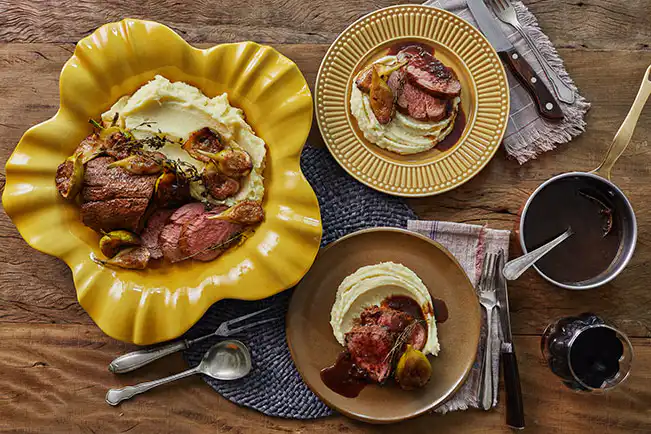

Towards the scent
Components
- 750 g tenderloin fillet in a roast beef cut
- 1 teaspoon of yellow mustard powder
- 1 teaspoon of smoked paprika
- 6 illustrations
- oil according to preference
- Season with salt and freshly ground pepper to taste.
Setup phase
- Set the oven to 220 °C (high heat). Take the mignon fillet out of the refrigerator and let it sit at room temperature for 15 minutes as the oven heats up.
- In a small bowl, combine the paprika and mustard powder. Place the mignon fillet on a cutting board and season it with salt, pepper, and the paprika-mustard blend. Drizzle half a tablespoon of olive oil over the meat and rub it thoroughly over the entire surface with your hands.
- Place the mignon fillet in a large, lightweight oven baking pan and cook for 15 minutes. Then, reduce the oven temperature to 180 °C (medium heat) and continue roasting the beef for an additional 10 minutes to achieve a well-red interior. For a more cooked finish, roast for an extra 5 minutes. While the beef is roasting, prepare the sauce as described in the sauce preparation step below.
- Take the baking pan out of the oven and allow the roast beef to rest for 10 minutes before slicing – this resting period helps the juices redistribute, making the meat juicier. In the meantime, get the grilled figs ready.
- Thoroughly rinse the fig skins under running water. Pat dry and slice 3 figs in half and cut 3 figs into quarters. Heat a non-stick skillet over medium heat. Add a drizzle of olive oil and place the figs cut side down in the pan. Cook for 2 minutes on each side until browned. Serve the roast beef alongside the grilled figs and sauce.
To prepare the sauce
Components
- 1/2 cup of red wine (tea measurement)
- 1/4 cup of fig jam
- Half an onion
- 1 garlic clove
- 1 cup of water (tea)
- Half a tablespoon of olive oil
- Two sprigs of thyme
- Six chili pepper seeds
- salt according to preference
- Half a tablespoon of frozen butter
Ready state
- Remove the onion skin and cut it into rings. Using the flat side of the knife, crush the garlic clove and peel – there’s no need to chop finely.
- Place a small pan over medium heat. Once heated, combine the water and olive oil, then add the onion and season with a pinch of salt. Sauté for 2 minutes until it turns a nice golden color. Stir in the crushed garlic, thyme sprigs, and chili pepper, cooking for another 2 minutes to release their aroma.
- Remove from heat and stir thoroughly, scraping the bottom of the pan to dissolve any burnt bits. Pour in the wine and cook for 5 minutes to create a flavorful broth.
- Using a sieve, strain the broth into a bowl and then pour it back into the pan (there’s no need to clean the pan). Stir the fig jelly thoroughly with a wire whisk until it dissolves. Place the pan over medium heat and cook without stirring for approximately 10 minutes after it starts boiling – during this time, the sauce will reduce by nearly half, becoming thicker and more vibrant. To check the consistency, dip a spoon into the sauce; it should come out coated with a glossy layer.
- Remove the pan from the heat, add the cold butter, and gently stir in slow, circular motions to melt it gradually, creating a richer sauce. Serve immediately.
Cooking stock
If a small amount of steak broth has accumulated in the baking pan, stir it into the sauce when serving. This adds an extra depth of flavor.
Fig jelly made at home
If you plan to make the sauce using pan jam, pulse the jelly in a food processor before beginning the recipe.
For making mashed potatoes
Components
- One kilogram of potatoes
- 1 cup of milk (tea size)
- 2 tablespoons of butter
- Grated nutmeg as desired
- season with salt as desired
- 50 grams of thoroughly frozen butter
Setup phase
- Remove the skins and chop the potatoes into medium-sized chunks. Place them in a pot, cover with water, and add 1 teaspoon of salt for seasoning.
- Place the pot with the potatoes over high heat. Once it begins to boil, reduce the heat to medium and cook for 20 minutes or until the potatoes are very tender – test by piercing with a fork.
- In the meantime, place the milk in a small saucepan and warm it over low heat. There’s no need to bring the milk to a boil. The objective is to maintain the milk at the same temperature as the potato – this is one of the keys to preventing the puree from breaking.
- Once cooked, thoroughly drain the potatoes – the drier, the better. While still warm, run the potatoes through the juicer using the same pan without any water.
- Place the pan back on medium heat and slowly add the milk, stirring continuously with a whisk to combine. Remove from heat, then season with salt and nutmeg to your preference. Stir in 2 tablespoons of butter until well blended.
- For an extra smooth puree, cut 50 g of cold butter into cubes. Put the puree into a mixer and begin blending at low speed. Slowly add the butter, one cube at a time, blending after each addition. Serve immediately.
Focus on texture
Depending on the type of potatoes used (since some are drier than others), the puree may become creamy sooner and may not require the full amount of additional butter.

